
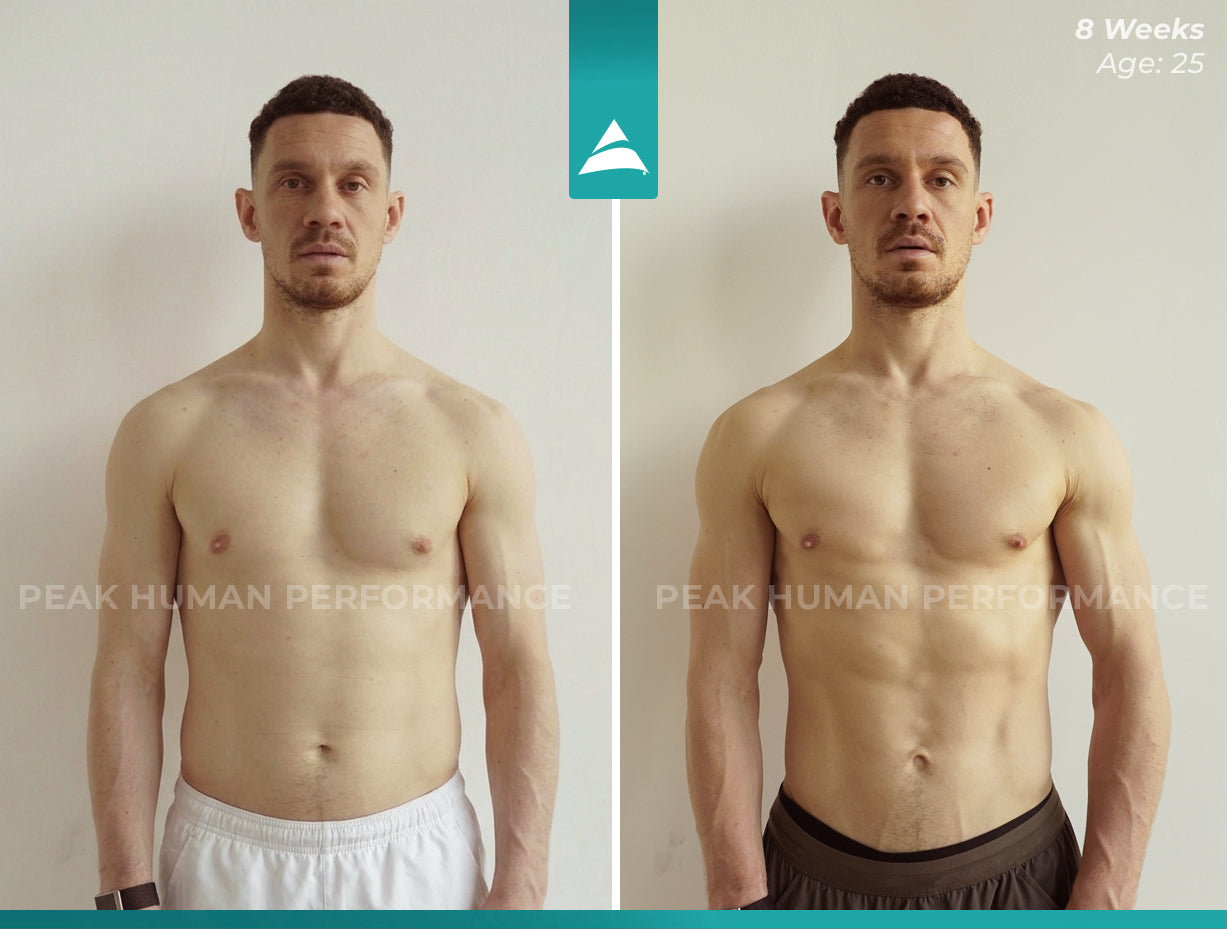
/// +4.9kg Lean mass /// -2.2%BF
8 Weeks ///
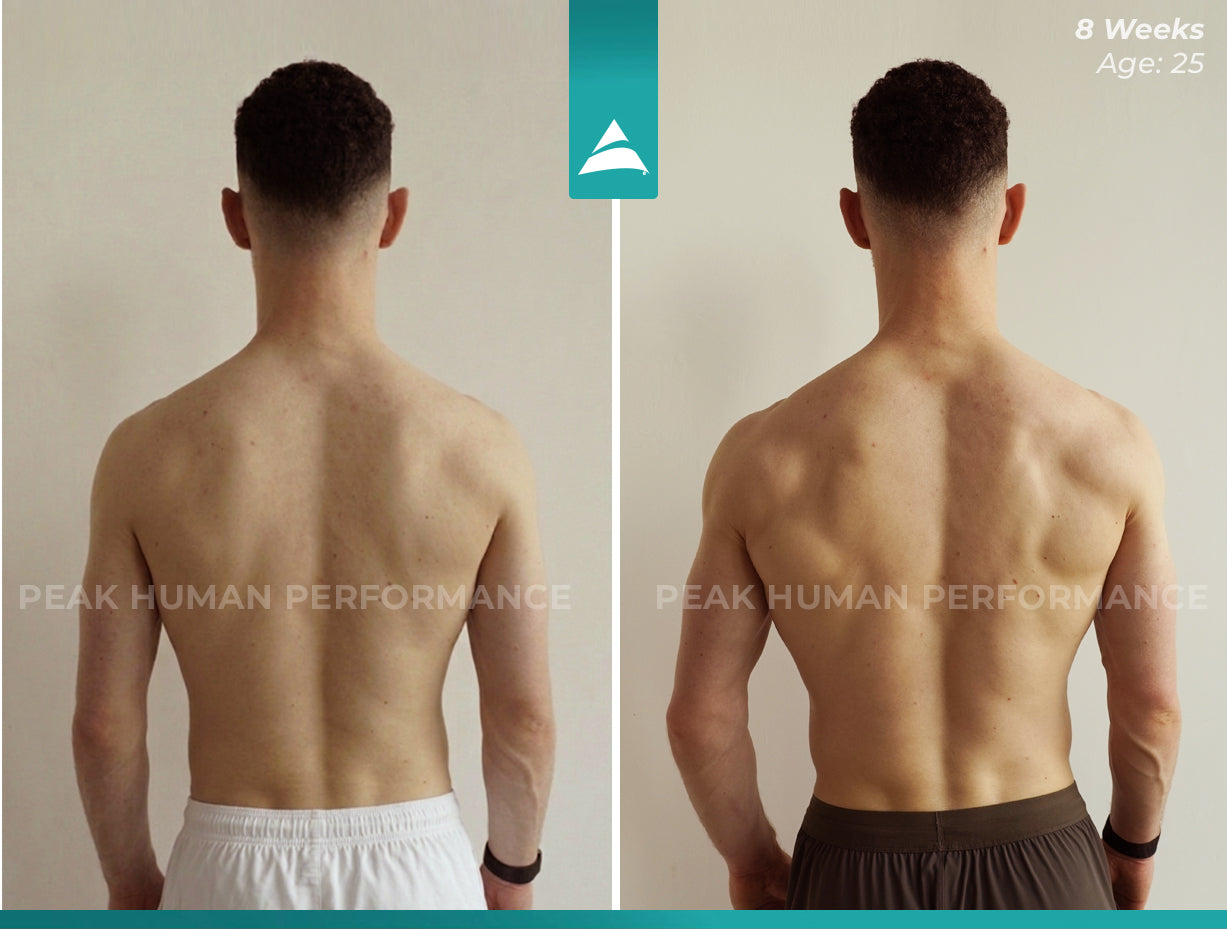
/// +4.9kg Lean mass /// -2.2%BF
8 Weeks ///
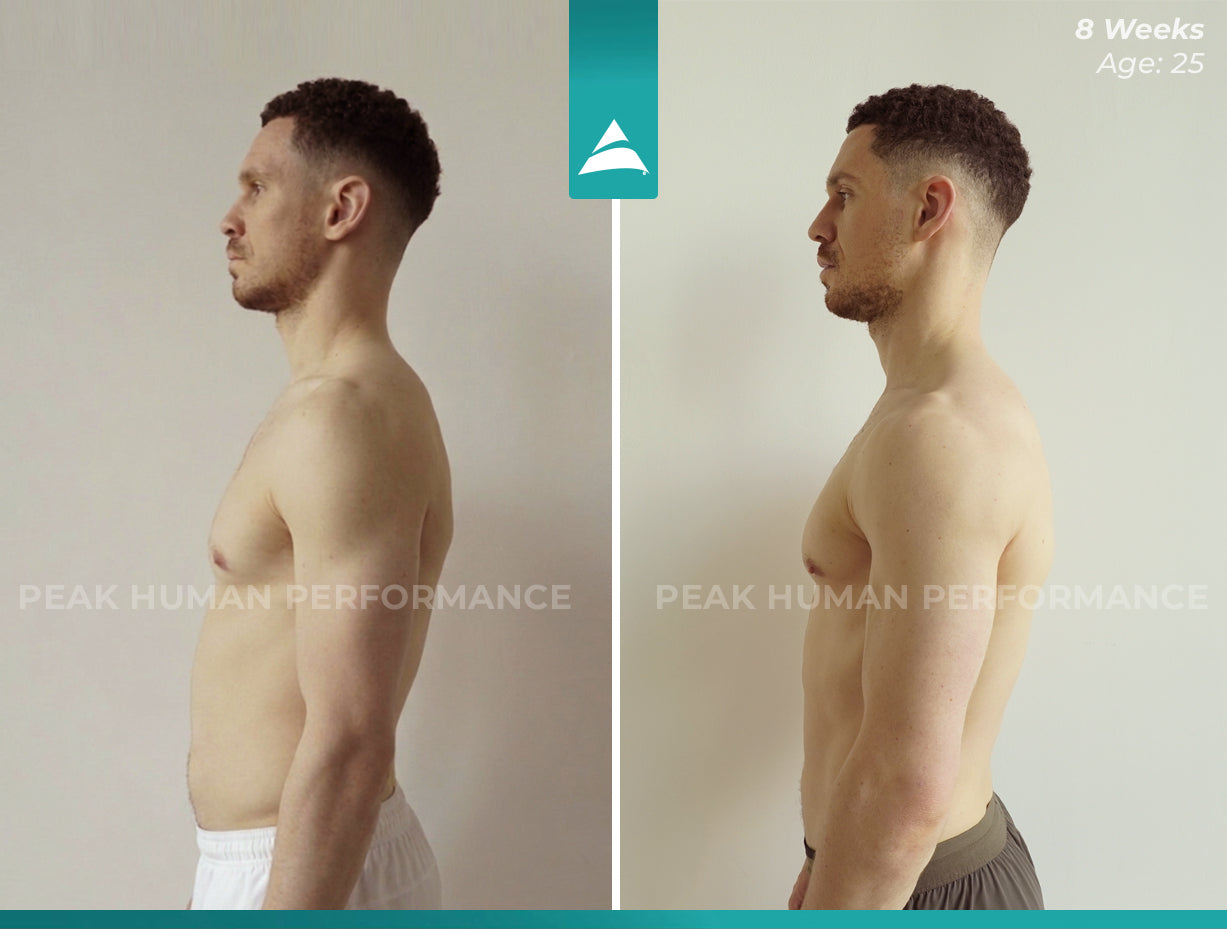
/// +4.9kg Lean mass /// -2.2%BF
8 Weeks ///
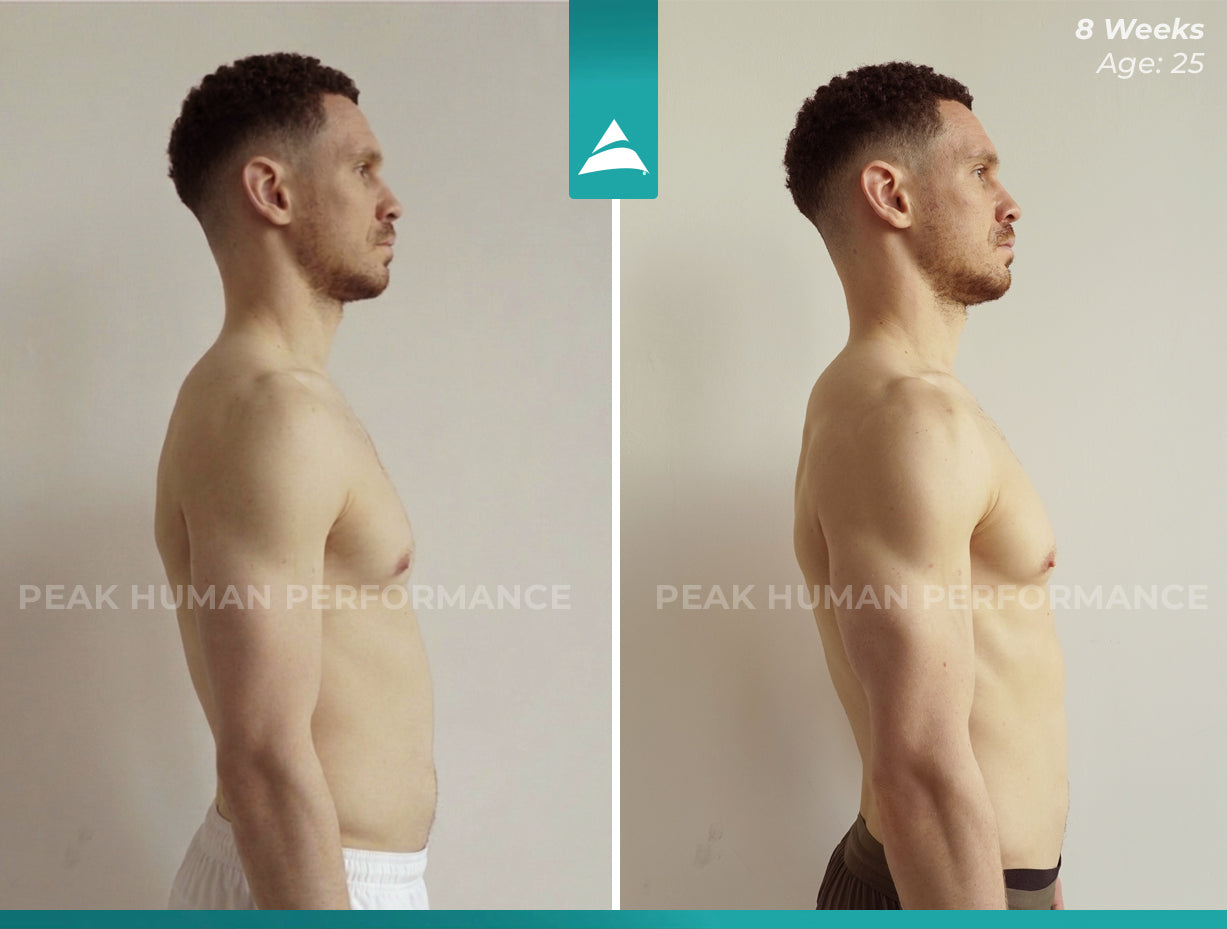
/// +4.9kg Lean mass /// -2.2%BF
8 Weeks ///
Ben's Story
"Building a stronger athlete is about more than getting stronger—it's about improving performance where it matters."
When Ben Windle, a Top 150 world-ranked squash player, came to Kuala Lumpur, he joined Peak Human Performance to maintain his strength and conditioning while training daily with the Malaysian National Squash Team.
During our first assessment, two weaknesses immediately stood out.
The first was a significant imbalance between his anterior and posterior chain. Despite being able to squat around his own body weight, he was visibly shaking while performing lying leg curls with only 12.5 kg, revealing a major weakness in his hamstrings.
The second was that, despite competing at an elite level, his absolute strength was far below his athletic potential. His numbers in key lifts such as the overhead press, front squat and chin-ups suggested there was considerable room for improvement.
Ben also identified two specific challenges affecting his game:
- Exploding back to position after deep lunges.
- Generating more power for high backhand shots.
Rather than simply making him stronger, we built a programme to solve those exact problems.
Over four consecutive two-week phases, we systematically developed every aspect of his performance.
- Phase 1: Build lean muscle mass while improving body composition.
- Phase 2: Develop maximal strength through lower repetition ranges.
- Phase 3: Increase neurological efficiency using cluster training, performing 5 singles at his 1RM to maximise force production.
- Phase 4: Convert strength into sport-specific power using Olympic lifting, plyometrics, hurdle work, high pulls and explosive movement drills that replicated the demands of elite squash.
We also incorporated exercises designed to improve deep lunge stability, trunk control and the ability to rapidly recover after extended court positions—qualities that directly transferred to his movement on court.
One of the biggest challenges wasn't the training itself—it was recovering from it.
Ben was playing squash almost every day while completing 3–4 strength and conditioning sessions each week, leaving him with only one recovery day.
To support this workload, recovery became a priority.
Consistent sleep, contrast therapy, infrared and red-light therapy, together with ice baths, allowed him to recover effectively and maintain a high training volume without compromising performance.
The result wasn't simply a stronger athlete.
According to Ben:
"My game changed significantly. I became far more explosive and started winning balls that I previously wouldn't have reached."
For elite athletes, success is rarely about doing more.
It's about identifying the weakest links, strengthening them systematically and ensuring every improvement transfers directly into sporting performance.
At Peak Human Performance, we don't train athletes to lift heavier weights—we train them to perform better when it matters most.